






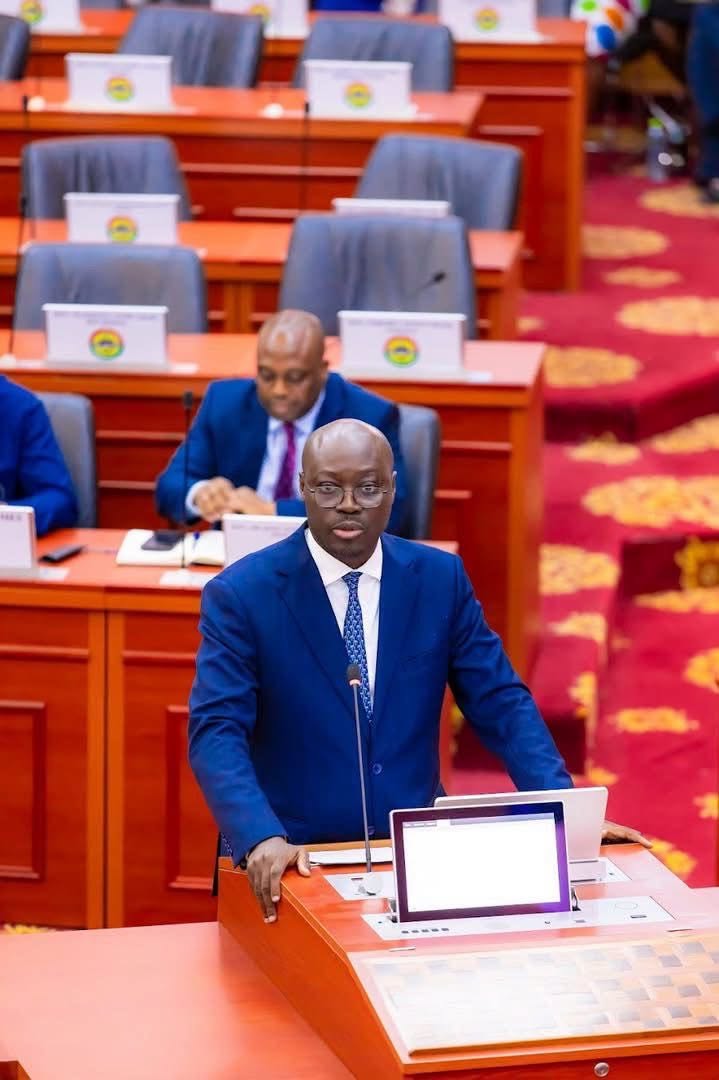
Finance Minister Dr. Cassiel Ato Forson is expected to present the 2026 Mid-Year Budget Review to Parliament today, Thursday, July 23, 2026, outlining the government’s policy direction for the remainder of the year.
The review is more than a statutory fiscal update. It is expected to assess how the economy has performed during the first half of 2026 against the targets set in the national budget and provide any policy adjustments needed to sustain growth and fiscal discipline.
When the 2026 Budget was presented in November 2025, government sought to shift the economy from a period of macroeconomic stabilisation to one of sustained expansion, targeting stronger economic growth while maintaining prudent public finances.
Six months on, available economic indicators suggest that the economy has broadly outperformed expectations.
Inflation has fallen sharply to 5.3 percent, below government’s medium-term target band of 8%, plus or minus 2 percentage points, while recent data point to continued improvements in fiscal consolidation, external sector performance and debt sustainability.
The original 2026 Budget targeted real GDP growth of at least 4.8%, non-oil GDP growth of 4.9%, an overall fiscal deficit of 2% of GDP, a primary fiscal surplus of 1.5% of GDP, and international reserves sufficient to cover at least three months of imports.
The review is expected to indicate whether these targets remain achievable and whether government intends to revise any of its macroeconomic assumptions in response to current domestic and global economic conditions.
Beyond the headline economic numbers, the Finance Minister is expected to provide updates on revenue mobilisation, public expenditure, debt management and financing plans for the second half of the year.
However, there are strong indications that the review will not introduce new taxes, allowing government to focus instead on implementing existing fiscal measures to sustain macroeconomic stability.
Another key area of focus will be Ghana’s relationship with the International Monetary Fund.
The review is expected to provide an update on the successful completion of Ghana’s Extended Credit Facility programme and the country’s planned transition to the IMF’s Policy Coordination Instrument (PCI), which is expected to anchor macroeconomic policy and reinforce investor confidence after the bailout programme ends.
The Mid-Year Budget Review matters because it outlines the government’s spending priorities, borrowing plans and broader economic policies for the remainder of the year.
It also offers important clues on the outlook for inflation, interest rates, exchange rate stability and the overall business environment.
Businesses, investors and development partners will be watching closely for any changes to expenditure allocations or financing strategies.